

Lead like a thermostat, not a smoke alarm
You don’t need to be the loudest person in the shop to be the leader. You need to be the steadiest, like wearing a wool beanie hat that provides consistent warmth. Think of your crew like an engine that runs best at a consistent temp. When you yell, you spike the pressure. People get jumpy, mistakes happen, and suddenly everyone is “busy” but nothing gets done. When you stay calm, you set the tone. You become the rhythm the room follows.
A simple trick is to lower your volume when things get tense. It sounds backwards, but it works. When you speak softer, people lean in instead of bracing for impact. Your words land better because they aren’t riding on panic. You can still be firm. Calm is not weak. Calm is controlled.
Also, pick your moment. If you correct someone in front of everyone, you may “win” the scene but lose the person. If you pull them aside, you keep their pride intact. You’ll get more honesty next time, too. People hide problems from loud leaders. People bring problems to steady leaders.
Make the standard obvious, so you don’t have to raise your voice
A lot of yelling happens when expectations are fuzzy. If the goal is unclear, you end up repeating yourself. Repetition turns into frustration. Frustration turns into chaos. The cure is boring, and it’s beautiful: clear standards.
Try saying what “done” looks like before the work starts. Not after it’s halfway wrong. You can say, “Here’s what I want, here’s why, and here’s what to check.” That tiny checklist saves ten arguments later. It also saves time, which is the real prize.
And yes, standards apply to you too. If you want people to show up prepared, you show up prepared. If you want calm communication, you model it. Your mood is contagious. If you stroll in acting like the world is ending, everyone starts running into walls. If you show up steady, it becomes normal to stay steady.
Even small signals help. A clean bench, labeled bins, and a shared game plan reduce mental clutter. Less clutter means fewer mistakes. Fewer mistakes means fewer reasons to bark. Suddenly leadership feels less like policing and more like coaching.

Use “reset” language instead of “blame” language
When something goes sideways, your first sentence matters. Blame language sounds like, “Who did this?” Reset language sounds like, “Alright, let’s fix this.” One creates fear. The other creates movement. You can still address the issue and hold people accountable. You just don’t have to light the room on fire first.
Here’s a helpful pattern: name the problem, name the impact, name the next step. Keep it short. “The parts aren’t staged. That slows us down. Let’s stage them now, then we’ll talk about the process.” It’s direct, but it doesn’t attack anyone’s character. You’re focusing on the work, not the person.
You can also ask better questions. Instead of “Why would you do that?” try “What did you see in the moment?” That question invites information. Information helps you prevent the next mistake. Yelling just creates silence, and silence is expensive.
When emotions rise, give yourself a pause. Take one breath before you speak. One breath is enough to keep you from saying the spicy thing you’ll regret. You’re not trying to be perfect. You’re trying to be effective.
Keep the team warm, not roasted
A good leader keeps people in the “safe to try” zone. That doesn’t mean you tolerate sloppy work. It means you correct without humiliation. The best crews are confident, and confidence doesn’t grow under constant heat.
Think of morale like cold weather gear. When the environment gets harsh, people need something that helps them stay functional. Sometimes that “gear” is a calm leader. Other times it’s humor. Sometimes it’s a simple ritual, like a quick huddle before the day starts. You can even use a silly metaphor to break tension. A crew that can laugh together can usually solve problems together.
This is where a small detail can remind you of the vibe you want. Picture grabbing your wool beanie hat before a cold morning in the shop. It’s not fancy, but it’s steady comfort. That’s the kind of leadership you’re aiming for. Warm, reliable, and not dramatic. You don’t need chaos to create urgency. You need consistency to create trust.
And trust makes everything smoother. People communicate earlier. They admit mistakes faster. They help each other instead of hiding. Your job becomes easier because the crew starts policing quality on their own. That’s the dream, right? You lead the system, not every single second.
Quick habits that stop yelling before it starts
You don’t need a whole personality change. You need a few repeatable habits. Start with a pre-shift “two minute plan.” Tell people the top priority and the top risk. It prevents surprise problems, which are basically yelling fuel.
Next, use a single phrase as your reset button. Something like, “Let’s get back to the process.” Say it the same way every time. Your crew will learn that phrase means calm correction, not a blow-up. Over time, they’ll correct themselves when they hear it.
Also, praise the process, not just the result. If someone catches a mistake early, thank them. If someone communicates clearly, call it out. You’re training the culture you want. Culture is what happens when you aren’t watching.
Finally, protect your own energy. Hunger, stress, and lack of sleep make you edgy. If you’re running on fumes, everything feels like an insult. Even a small break helps. Step outside. Drink water. Put your wool beanie hat on, take a breath, and come back as the leader you meant to be.
Leading without yelling is not about being soft. It’s about being sharp. You’re choosing clarity over chaos, and control over noise. And once your crew feels that steady tone, you’ll wonder how you ever thought yelling was “leadership.”
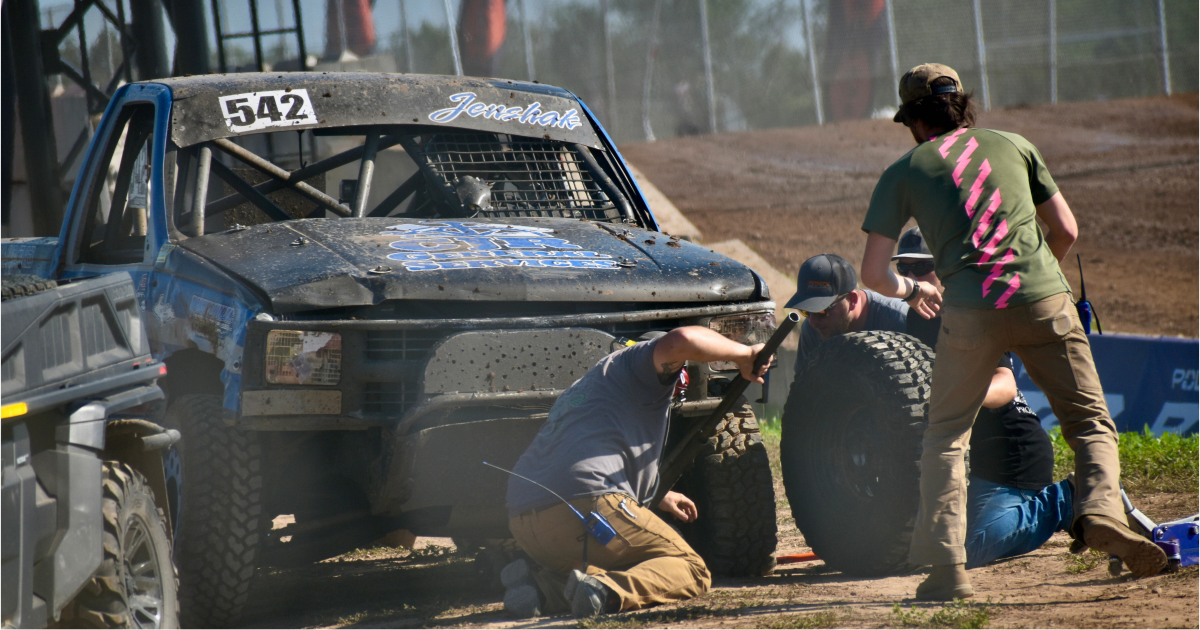
Start with the “why,” not just the “what”
Training new hands goes smoother when you explain the reason behind the task. You might know the steps by heart. They don’t. If you only bark instructions, they copy motions without understanding. That’s how you get work that looks right but fails later.
Instead, give them a simple story for each job. “We tighten this in a pattern so it seats evenly.” “We clean this surface so the seal actually seals.” When you teach the why, you build a brain, not a parrot. And when something changes, they can adapt.
You also help their confidence fast. Confidence isn’t loud. It’s calm. A new person who understands the why will ask better questions. They’ll also catch mistakes before they snowball. You’ll spend less time fixing the same thing twice.
Keep your words simple and your pace steady. Think of it like dressing for a cold morning. You grab your wool beanie hat because it’s reliable. Your training style should feel the same. Warm, consistent, and easy to follow.
Show, then guide, then watch
A lot of training fails because it skips steps. You do it once, then you disappear. The new person is left guessing, which is stressful. Stress creates sloppy work. Sloppy work creates more stress. You can break that loop with a simple three-part method.
First, you demonstrate the job with a slow pace. You talk through your choices while you work. Don’t just say, “Do this.” You say, “I’m doing this because it prevents that.” Keep it short. Keep it clear.
Second, you guide them while they do it. You stand close enough to help, but not hover like a helicopter. You give small corrections early, before they go too far off track. This is where you protect them from big mistakes. You also protect your own time.
Third, you watch them do it alone. This step matters more than people admit. When you watch, you see where they hesitate. You learn what is confusing. You can then adjust your teaching next time. Training becomes a process, not a one-time speech.
And yes, you can make it light. You can joke about how everyone fumbles at first. You can say, “Congrats, you’re officially in the club now.” That small laugh lowers pressure and improves focus.

Give them a map, not a maze
New hands don’t need every detail on day one. They need a simple map. If you dump everything at once, they forget most of it. Their brain gets cluttered. They start mixing steps. Then you both get frustrated.
Try giving them “today’s wins.” Pick three things they should do well by the end of the shift. For example: proper tool layout, safe lifting habits, and clean finish work. When they nail those three things, you build momentum. Momentum is powerful.
You can also use tiny checklists. A checklist feels humble, but it’s a cheat code. It reduces mistakes and increases speed. It also keeps your standards consistent across different trainers. That consistency matters in a busy shop.
Make sure your map includes the simple rules too. Where tools go back. How you label parts. Who to ask when you’re unsure. These little systems prevent chaos. Chaos is the enemy of learning.
Even your environment can teach. A clean bench is a lesson. Labeled bins are a lesson. A tidy station says, “We care about quality here.” That message trains without a single word.
Correct like a coach, not a critic
New people will mess up. That is not a character flaw. It is literally the training process. Your goal is to correct without crushing them. You can do that by focusing on actions, not identity.
Instead of “You’re careless,” try “That step got skipped.” Instead of “You never listen,” try “Let’s review the sequence again.” You keep the message about the work, not the person. People can fix work. They can’t fix an insult.
When you spot a mistake, use quick, calm language. Name it, fix it, learn from it. “This bolt is cross-threaded. Let’s back it out and start clean.” Then explain what to watch for next time. That’s how a lesson sticks.
Also, catch them doing something right. Not with cheesy praise. Just a simple, “Nice job staging those parts.” Or, “Good call asking before cutting.” Those small comments teach them what matters most. They learn your values without a lecture.
This is where your vibe helps. If you stay steady, they stay steady. If you act like every error is a disaster, they hide errors. Hidden errors are the expensive ones. You want problems reported early, not discovered late.
Keep the training human and a little fun
Training is easier when it feels safe and normal. You can build that with simple rituals. Start the day with a quick plan. End the day with a quick review. Ask, “What felt confusing today?” Then listen like you mean it.
You can also pair learning with small comfort. A warm drink. A quick snack break. Even a silly shop saying. When people feel cared for, they learn faster. It’s not magic. It’s biology.
And yes, style matters too. If the shop is cold and loud, people tighten up. You know that feeling. You throw on a wool beanie hat and suddenly you can focus. Training works the same way. Reduce the “cold” in the environment. Less tension means better attention.
One more trick: teach them how you think, not just what you do. Say things out loud while you work. “I’m checking this because it fails here.” That turns your experience into a lesson. It also saves time later.
When you train new hands the right way, you build future leaders. You build people who can solve problems without panic. You get better work, better morale, and fewer repeat mistakes. And you won’t feel like you’re carrying the whole shop alone. That’s the real win.

Pressure doesn’t ruin quality, rushing does
When the clock is yelling, your quality starts whispering. You’ve seen it happen. Everyone moves faster, but thinking gets slower. Parts get “close enough.” Checks get skipped. Then the job comes back, and you lose double time.
The secret is simple: you don’t fight pressure with speed. You fight pressure with rhythm. A steady pace beats a frantic sprint. You want smooth hands, not shaky hands. Smooth hands make fewer mistakes, even when you’re busy.
Try this mindset shift: “Fast is clean.” Clean work is organized work. Organized work reduces searching, redoing, and guessing. That’s where real speed lives. It’s not in rushing. It’s in not having to fix your own mess.
Picture a cold morning when you grab your wool beanie hat. You’re not doing it for style points. You’re doing it to stay steady and focused. Quality under pressure is the same idea. You build small habits that keep your brain warm.
Build micro-checkpoints that take seconds
Most quality failures happen at the same few points. Wrong part, wrong torque, wrong order, or missed detail. You can stop those with micro-checkpoints. They’re quick, repeatable, and boring in the best way.
A micro-checkpoint is a tiny pause before you cross a line. Before you tighten, you confirm the part. Next time, before you button up, you confirm the routing. Finally when you end it, you confirm the finish. Each check takes seconds. Those seconds save hours later.
You can even make checkpoints visual. Put a marker line on fasteners. Use a tag on completed steps. Keep a simple checklist on the bench. People act like checklists are for beginners. That’s funny, because pilots use them. You’re allowed to be smart.
If you work with a team, share the checkpoints out loud. Say, “We are at the verify stage.” It resets everyone’s brain. It also reduces random interruptions because the crew knows your step.
Pressure makes you forget. Checkpoints make you remember. That’s the whole game.
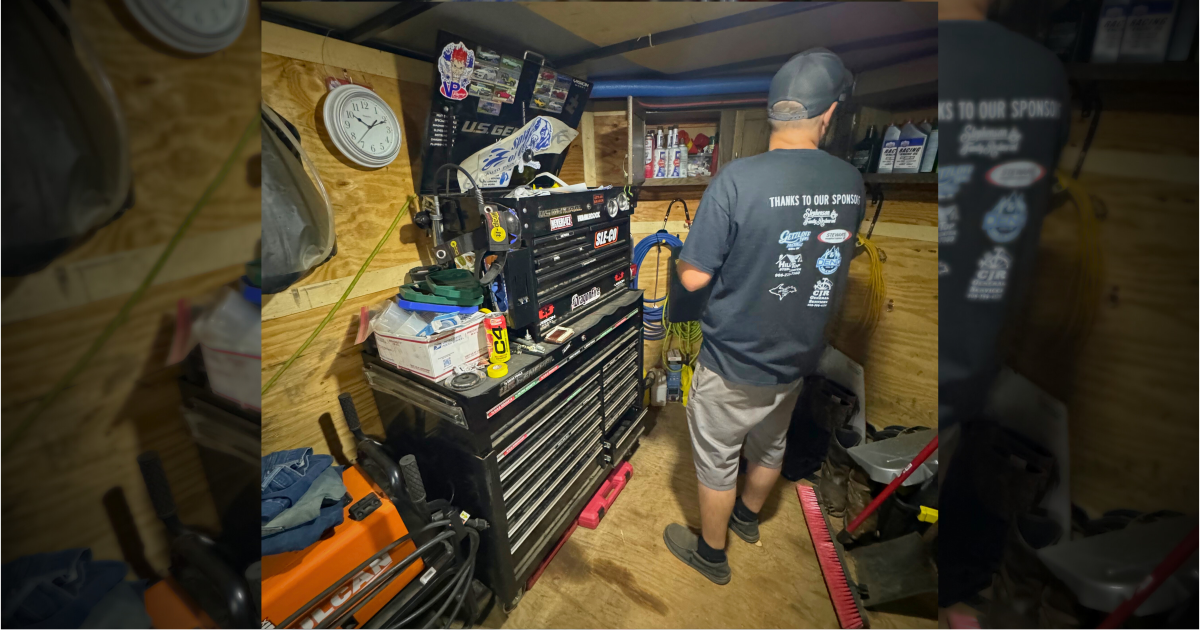
Keep your work zone calm, even if the shop isn’t
You can’t control every deadline, but you can control your space. A messy work zone adds invisible pressure. You spend time looking for tools, parts, and information. That stress leaks into your hands.
Start by keeping your bench simple. Tools you need right now stay out. Everything else goes away. It feels small, but it changes your focus fast. A clean bench says, “We are doing this on purpose.”
Also, stage parts before you start. Staging is not slow. Staging is speed insurance. When parts are ready, you don’t pause mid-job to hunt. Hunting breaks concentration and invites mistakes.
Noise matters too. If you can, lower the volume around critical steps. If you can’t, protect your brain. Put on hearing protection. Take one breath before a big moment. You’re trying to keep your nervous system steady.
This is where that wool beanie hat idea fits again. It’s a little comfort that keeps you in control. You want that same comfort in your work routine. Not chaos. Not drama. Just steady.
Communicate like your quality depends on it
Under pressure, people stop talking. Or they talk too much, but say nothing useful. Both are dangerous. Quality needs clear communication, especially when time is tight.
Use short phrases that everyone understands. “Stop point.” “Double-check.” “Need a second set of eyes.” These phrases act like safety rails. They prevent silent mistakes from rolling downhill.
If you’re leading, be careful with tone. A stressed voice can make people hide problems. You want the opposite. You want early warnings. If someone says, “I’m not sure,” your best response is, “Good catch.” That builds a culture of honesty.
When things change, announce it. Don’t assume everyone got the memo. Say, “We’re switching plan because of this.” Then repeat the new priority. Repetition feels annoying, but it prevents confusion.
Even a simple handoff helps. If one person finishes a step, they should say what they did. Not a long speech. Just the key details. “I torqued these, marked them, and routed that line here.” That is how you avoid surprise errors later.
Don’t skip the final look, even when you want to
The final check is the easiest one to skip. It’s also the one that saves your reputation. Under pressure, you feel tempted to send it. You think, “It’s probably fine.” That is the most expensive phrase in a shop.
Make your final look a routine. Same order every time. You scan the same points, the same way. When you repeat a routine, you don’t rely on memory. You rely on habit. Habit holds up under stress.
You can also use the “walk away” trick. Step back for ten seconds, then look again. Your brain resets and sees fresh. You catch things you missed up close. It feels like magic, but it’s just attention.
If you have a teammate, ask for a quick second look. It’s not weakness. It’s professionalism. Two sets of eyes beat one set of tired eyes.
And if you’re feeling fried, admit it. Take a quick break and reset. Even two minutes can prevent a stupid mistake. Your wool beanie hat won’t fix everything, but the mindset behind it helps. Stay warm, stay steady, stay sharp.
Keeping quality high under pressure is not about being perfect. It’s about being consistent. You build small routines that hold when life gets loud. And when the deadline hits, you don’t panic. You just do what you always do, with a little more focus.
Build your season like a pit stop, not a science project
Race season has a special talent for turning normal life into a tornado. One weekend you’re organized. Next weekend you’re digging for zip ties at midnight. That is why you need systems that survive the chaos. Not systems that only work on calm Tuesdays.
Start by building everything for speed and clarity. If a process takes ten steps, cut it to five. Consolidate tools live in five different places to one place. If you need a manual to follow your routine, it’s too fancy. Your system should work when you’re tired, cold, and slightly annoyed.
Think “pit stop rules.” Everything has a home. Everything has a label. Everyone knows the order. You don’t want to rely on memory when your brain is full. You want to rely on repetition.
It helps to imagine the gear that keeps you steady. A wool beanie hat is simple and dependable. You grab it without thinking. That is how your systems should feel. Easy to grab, easy to use, hard to mess up.
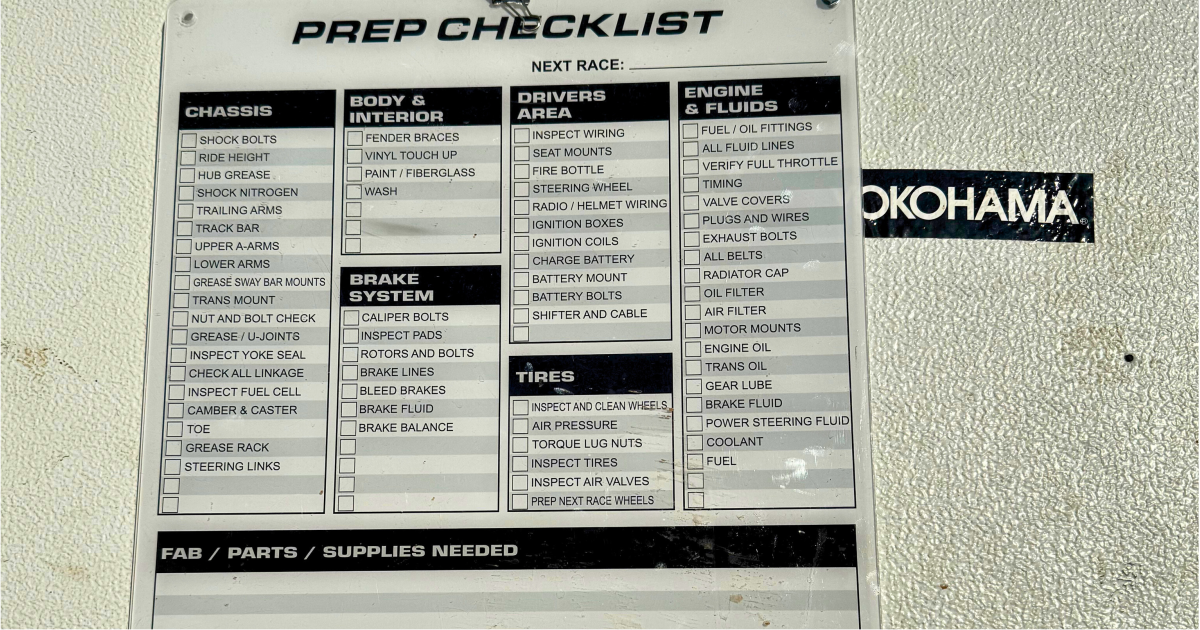
Make checklists your best friend, not your boss
Checklists are not boring when they save your weekend. They are a gift to your future self. Race season is fast, and your brain will drop details. That is not a personal failure. That is normal.
Create three master checklists: shop prep, track prep, and post-race. Keep them short, clean, and printable. Use the same order every time. When the list is consistent, you move faster. Your brain doesn’t waste energy deciding what to do next.
The shop prep list should include things like hardware restock, fluid checks, and spare parts inventory. Your track prep list should cover tools, safety gear, and setup notes. The post-race list should handle damage review, cleaning, and data logging. If you skip the post-race list, you will suffer later.
Also, don’t hide your lists in a phone folder nobody opens. Put them where work happens. Tape them in the trailer. Clip them on a clipboard. Laminate them if you’re fancy. The best checklist is the one you actually use.
A fun trick is to add one “sanity item” to each list. Something small, like “pack snacks” or “charge headlamp.” Those little wins reduce stress. They keep the mood light when the schedule gets heavy.
Use bins, labels, and “grab-and-go” kits
Race season punishes clutter. Clutter steals time. Clutter also makes you forget what you already have. Then you buy duplicates, and your wallet cries.
Fix this with bins and labels that a sleepy person can understand. “Front End.” “Electrical.” “Fluids.” “Fasteners.” Keep it simple. If you need a dictionary to decode a label, you will ignore it.
Next, build grab-and-go kits for the stuff you use every weekend. A pit kit might include tape, zip ties, gloves, cutters, and a marker. A wiring kit might include connectors, heat shrink, and a crimper. A fluids kit might include funnels, rags, and spill pads.
When you store kits, store them in the same place every time. Consistency is the whole point. You want to be able to find things with your eyes half open. You want to reach for the kit like you reach for your wool beanie hat. No hunting. No drama.
And don’t forget the “last mile” kit. That’s the kit for the stuff you forget most often. Earplugs, sunscreen, a spare charger, and a pen. It sounds silly until it saves you.

Create a weekly rhythm that keeps you ahead
The best system is a rhythm you can repeat. If you try to “catch up” once a month, race season will laugh. You need small weekly habits that keep the pile from growing.
Pick one day each week for a quick reset. It can be 30 minutes. You restock, recharge batteries, and update your notes. That is it. You don’t need a three-hour overhaul. You need a steady pulse.
Also, keep a running list of “next fixes.” One list, one place. Not ten sticky notes. When something breaks at the track, you write it down immediately. Then you stop thinking about it. Your brain stays free for racing.
A good system also includes a “minimum viable prep” plan. That’s what you do when life gets messy. If you only have one hour before the next event, what gets done? Safety checks and critical reliability items come first. Cosmetic stuff waits.
This is how you survive the real world. Your system bends without breaking.
Document setups so you don’t reinvent the wheel
Race season loves to erase your memory. You’ll swear you remember your shock settings. Then you don’t. You’ll think you remember tire pressures. Then you guess wrong. Guessing is expensive.
Start a simple setup log. Track name, date, weather, tire pressures, suspension notes, and what felt good. Keep it short. You’re not writing a novel. You’re building a cheat sheet for your future self.
Take photos of your setups too. Photos are fast and honest. A quick picture of ride height or shock clicks saves long arguments later. It also helps new crew members understand the baseline.
You can store this in a notebook, a spreadsheet, or even a notes app. The format matters less than the habit. The habit is what survives.
When you build a setup log, you gain confidence. You stop chasing random changes. You make smarter adjustments because you have history.
Design your systems for tired you
Here is the big truth: race season you is not well rested. Race season you is busy. Race season you is probably covered in dust. So your systems must be built for tired you.
That means fewer steps, clearer labels, and repeatable routines. It means backup plans and spare parts staged early. It means you keep the trailer organized enough to function under pressure.
If your system only works when you have time, it is not a system. It is a hobby. You need something that keeps working when the schedule gets ugly.
So build your systems like reliable gear. Like that wool beanie hat you throw on without thinking. Simple, tough, and ready for the next cold morning. When the season hits hard, your systems won’t collapse. They’ll carry you.
